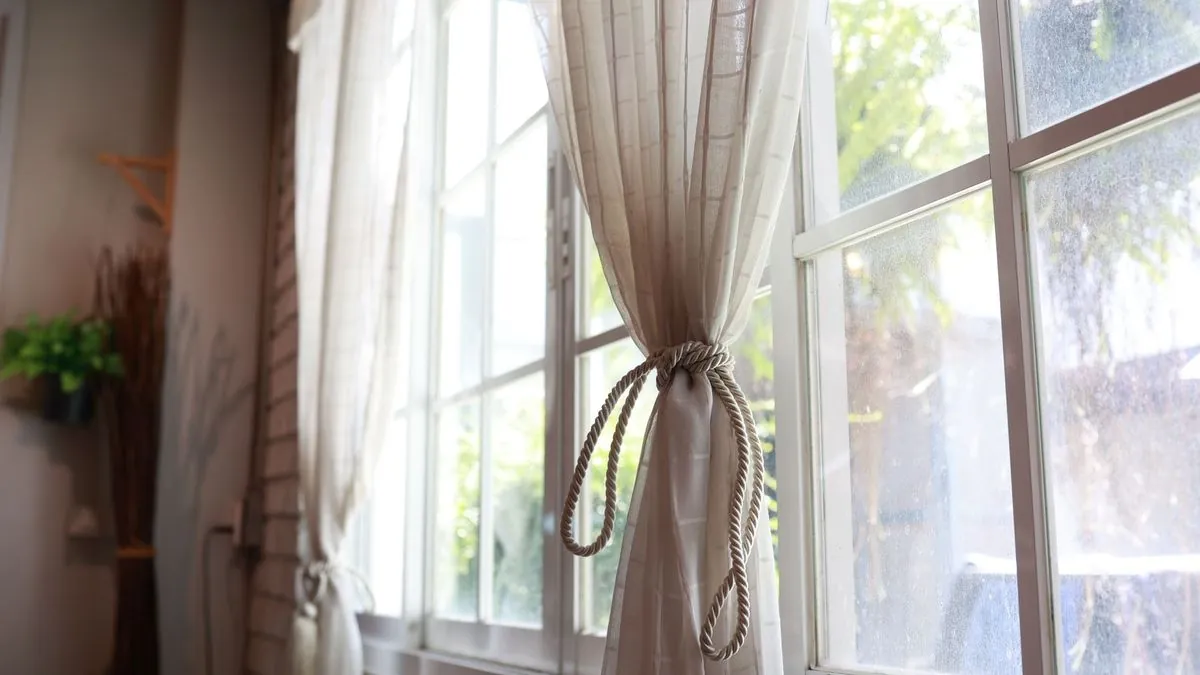
The best curtain design for an Indian home is a washable, mid-weight fabric with a lining, hung on a track or rod fixed high and wide, and dropped to about 1 cm above the floor. Choose the fabric for sun, heat and washing first, the heading for style second, and measure the track rather than the window.
This guide covers fabrics, headings, lengths, measuring and room-by-room choices for Chennai and Tamil Nadu conditions.
What makes a curtain design work in an Indian home?
Indian rooms take more daylight, dust and open-window hours than the European interiors most curtain photography comes from. Four constraints shape every decision.
- Light and heat. West- and south-facing windows take hard afternoon sun for months, so opacity and lining matter more than pattern.
- Dust and washing. Windows stay open for cross ventilation, so fabric has to survive frequent washing without shrinking or fading.
- Ceiling height. Many flats have modest ceiling heights, so mounting the track high is the cheapest way to add visual height.
- Hardware behind the fabric. Tracks, rods and pelmets decide how a curtain hangs long before the fabric does.
Which curtain fabrics suit Chennai's heat and sun?
Fabric is the one decision you cannot correct later without buying again. Weave density controls light, and the fibre controls care.
- Cotton and cotton blends breathe, wash well and suit rooms you open daily.
- Linen and linen blends drape well and show creasing as texture rather than a fault.
- Polyester blends resist fading and shrinkage, which is why most ready-made panels use them.
- Velvet and heavy jacquards block light but hold dust and feel warm in summer.
- Sheers in voile or net soften glare without closing the room off.
| Fabric | Light control | Care in a humid city | Best suited to |
|---|---|---|---|
| Cotton | Medium | Washes easily, may shrink slightly | Bedrooms, study rooms |
| Linen blend | Medium to low | Dry clean or gentle wash | Living rooms, balconies |
| Polyester blend | Medium to high | Machine wash, fade resistant | Sun-facing windows |
| Voile sheer | Low | Frequent light washes | Layering behind panels |
A thermal or dim-out lining behind a mid-weight fabric usually does more for a hot room than a heavier face fabric. Asian Paints' Beautiful Homes guide to curtain materials and styles covers the fibre-by-fibre trade-offs in more detail.
What are the main types of curtains and headings?
Once fabric is settled, the heading decides the look. Shops usually show you headings rather than fabrics, so it helps to know the vocabulary.
- Eyelet or grommet. Metal rings run directly on a rod and glide smoothly, with even, modern folds.
- Pencil pleat. A gathered tape that suits traditional rooms and works on both tracks and rods.
- Pinch or goblet pleat. Stitched groups of folds that hang in a crisp, tailored way.
- Wave or S-fold. A continuous soft wave on a track, the cleanest look across large glazing.
- Roman blinds. Not curtains at all, but often the right answer for a narrow kitchen or bathroom window.
Fabric house Edmund Bell's guide to curtain headings describes box, goblet, pencil, eyelet, pocket, tab-top and wave styles, which helps when you need to name a style precisely to a tailor.
How long should curtains be: sill, floor or puddled?
Length changes the mood of a room more than colour does. There are four standard drops, and the clearance figures below follow common retailer measuring guides such as Dunelm's measuring guide.
- Sill length stops about 1 cm above the sill, which suits kitchens and windows with furniture beneath.
- Apron length hangs roughly 15 cm below the sill and hides the window ledge.
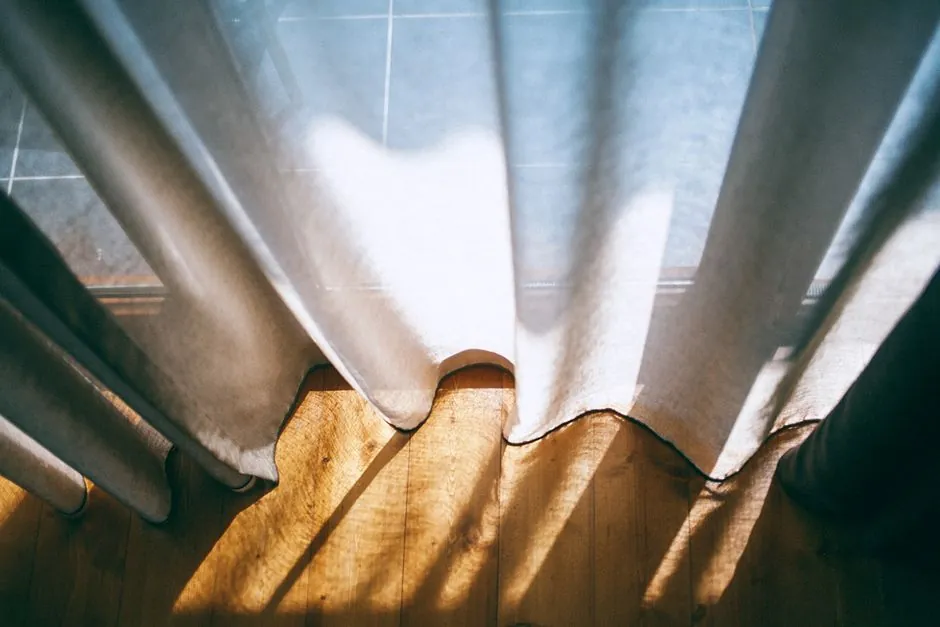
- Floor length stops about 1 cm clear of the finished floor, the safest choice for most rooms.
- Puddled adds a few centimetres of fabric on the floor for a formal look, but it collects dust and is a trip risk for children and pets.
How do you measure a window for curtains?
This is general practice rather than a promise about your window, because beams and false ceilings change things.
- Measure the track or rod, not the window. Width is taken across the hardware, because that is what the fabric has to cover.
- Extend the hardware 10 to 20 cm beyond each side of the opening so the stack of fabric sits on the wall and not across the glass.
- Mount high. Fixing the track well above the frame, close to the ceiling when the height allows, makes the window read taller.
- Apply a fullness ratio. Finished fabric width is commonly about 2 times the track width, and 2.5 times for a fuller look; sheers look best at the upper end.
- Decide the drop from the lengths above, measured from the hardware, not from the top of the window.
- Allow for hems. Add the heading tape at the top and a deep bottom hem, and let the fabric hang for a day before the final hem.
Always measure each window separately, because identical-looking openings often differ by a centimetre or two.
Track or rod: which should you choose?
Hardware is usually chosen last and regretted first. The decision follows ceiling type, curtain weight and how often the curtains are drawn.
- Rods suit eyelet and pencil-pleat panels, show as a decorative element and fix easily into masonry.
- Tracks carry heavier fabric, run quietly and can be recessed into a false ceiling or hidden behind a pelmet.
- Ceiling-mounted tracks are the neat way to run floor-to-ceiling fabric across wide glazing.
- Motorised tracks suit tall or hard-to-reach windows, but need a power point planned before the ceiling closes.
How do you choose curtains for living room windows?
Living rooms carry the largest glazing and the most mixed use, so layering earns its keep here. The same window has to handle daytime glare and evening privacy.
- Layer a sheer behind a heavier panel so you keep daylight without exposing the room to the street.
- Match drape colour to the wall, not the sofa, if you want the window to recede and the room to feel bigger.
- Watch the television wall. A window opposite the screen needs dim-out lining, not just a sheer.
For the layout around the windows, our living room interior designers in Chennai page shows how seating, lighting and the television unit are planned together.
What works for bedrooms, study rooms and door openings?
Curtain designs for windows change room by room, and the smaller openings are the ones most often got wrong.
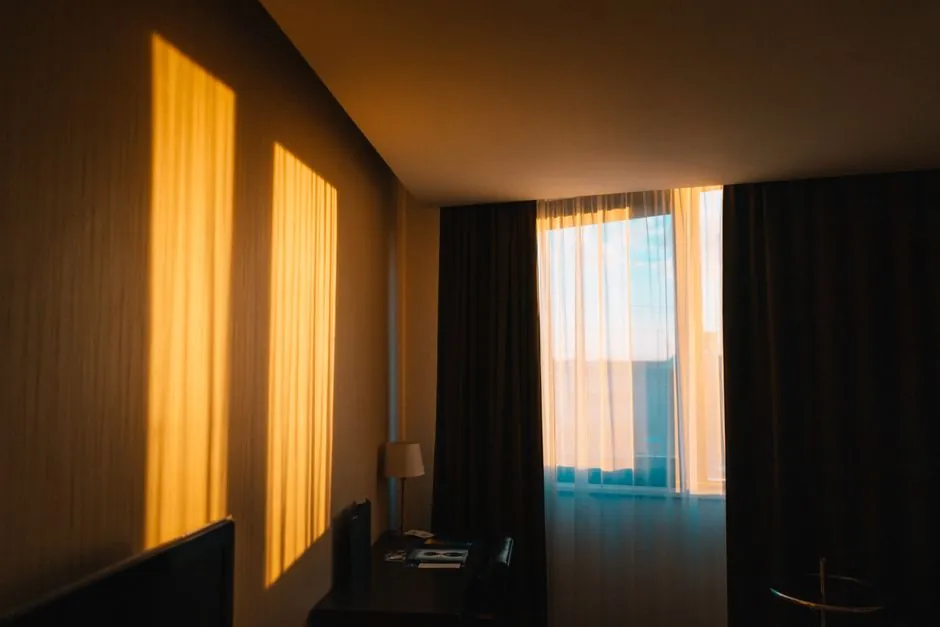
- Bedrooms want dim-out or blackout lining, a quiet track and a fabric you can wash seasonally.
- Study rooms need glare control at desk height, where a half sheer or a roller blind often beats a full drape.
- Kitchens and bathrooms suit a short Roman blind or a sill-length panel in a wipeable fabric.
- Door curtain design must allow for clearance, so the drop stops just above the threshold and never drags underfoot.
Bedroom drapes are easiest to get right when the bed and wardrobe layout is fixed first, which is the order our bedroom interior designers in Chennai page follows for the room as a whole.
What does a modern curtain design look like today?
The current look leans on proportion and texture rather than ornament, with fewer visual layers and more concealed hardware.
- Ceiling-to-floor drops in place of frame-height panels, even where the window is small.
- Concealed tracks inside a false-ceiling pocket, so no rod is visible at all.
- Sheer plus dim-out pairs instead of a three-layer sheer, drape and pelmet arrangement.
What do we see on window walls in Chennai homes?
Style Well Interiors has been designing homes in Chennai since 2013, and window walls come up in almost every room plan. A few patterns repeat often enough to say plainly.
- In our experience, west-facing living rooms in coastal flats need a lining, whatever the fabric showroom suggests.
- A washable blend in a mid tone outlasts a delicate silk, because fabric that is washed often is fabric that is kept.
- Style Well makes its furniture in-house, so wardrobe and television unit heights are settled at design stage, the right moment to decide where a track will sit.
Where window treatments are part of a whole-home plan, our best home interior designers in Chennai page explains how the scope is organised.
When should you get a designer involved?
Most single-window jobs can be done with a tape measure and a good tailor. Get help when the decision touches the ceiling, the wall or the room plan.
- Wide or double-height glazing, where track length, fixing strength and drop are hard to judge by eye.
- False ceilings not yet built, because a concealed track or motor needs its pocket and power point planned first.
- A full home interior, where curtain track lines, tall units and lighting should be decided together.
Large halls and double-height windows are the most common case, and our hall interior designers in Chennai page sets out how those rooms are planned.
Frequently asked questions
What is the best fabric for curtains in Chennai?
A cotton or polyester blend with a lining suits most Chennai rooms. Both wash easily and polyester resists fading on sun-facing windows. Velvet blocks light well but holds dust and feels warm in summer, so keep it for media rooms.
How much fabric do I need for curtains?
Plan on finished fabric about 2 times the track or rod width, and 2.5 times for a fuller look. Sheers look best at the upper end of that range. Always measure the hardware rather than the window.
How far above the floor should curtains stop?
Floor-length curtains usually stop about 1 cm clear of the finished floor so they do not drag or collect dust. Puddled curtains add a few centimetres of fabric on the floor, which looks formal but is a trip risk around children and pets.
Should I choose a curtain track or a rod?
Choose a rod for eyelet or pencil-pleat panels in light to medium fabric. Choose a track for heavier lined fabric, wave folds, wide glazing or a concealed finish in a false ceiling.
How high should curtains be hung?
Hang the track or rod well above the window frame, close to the ceiling when the height allows, and extend it 10 to 20 cm beyond each side of the opening. This makes the window look taller and keeps the stacked fabric off the glass.
Do west-facing windows need curtain lining?
Usually yes. West-facing windows take hard afternoon sun for months, and a thermal or dim-out lining behind a mid-weight fabric does more for a hot room than a heavier face fabric on its own.
How often should curtains be cleaned in a coastal city?
Vacuum or shake them out about once a month, since salt air and dust build up quickly, and wash them following the care label. Cotton and polyester blends usually take a gentle cold cycle. Check gliders and brackets at the same time.
Tell us your BHK size and budget band and our team replies with a clear itemised quote within 48 hours.
Tell us your BHK size and budget band — our team replies with a clear, itemised quote within 48 hours.