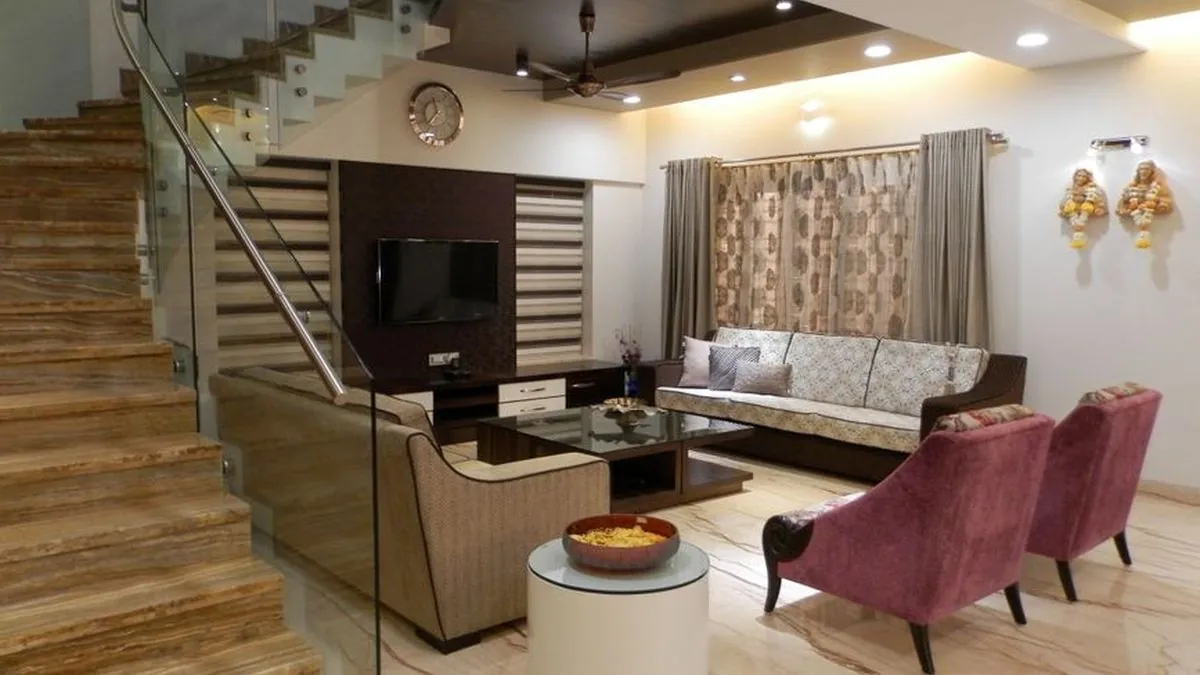
Is a false ceiling design worth the money in a Chennai flat, or is it only a lighting trick? Most homeowners ask that after seeing one photograph and one quote, and the two rarely match. A false ceiling in Chennai has to do three jobs at once: hide wiring and ducting, carry the lighting plan, and survive coastal humidity for years without sagging or staining. Get the material right and it does all three. Get it wrong and you are repainting a patch above the sofa every second monsoon.
This guide covers what each material does, which room it belongs in, what Style Well Interior charges per square foot, how the work actually runs on site, and what to settle before anyone drills the slab.
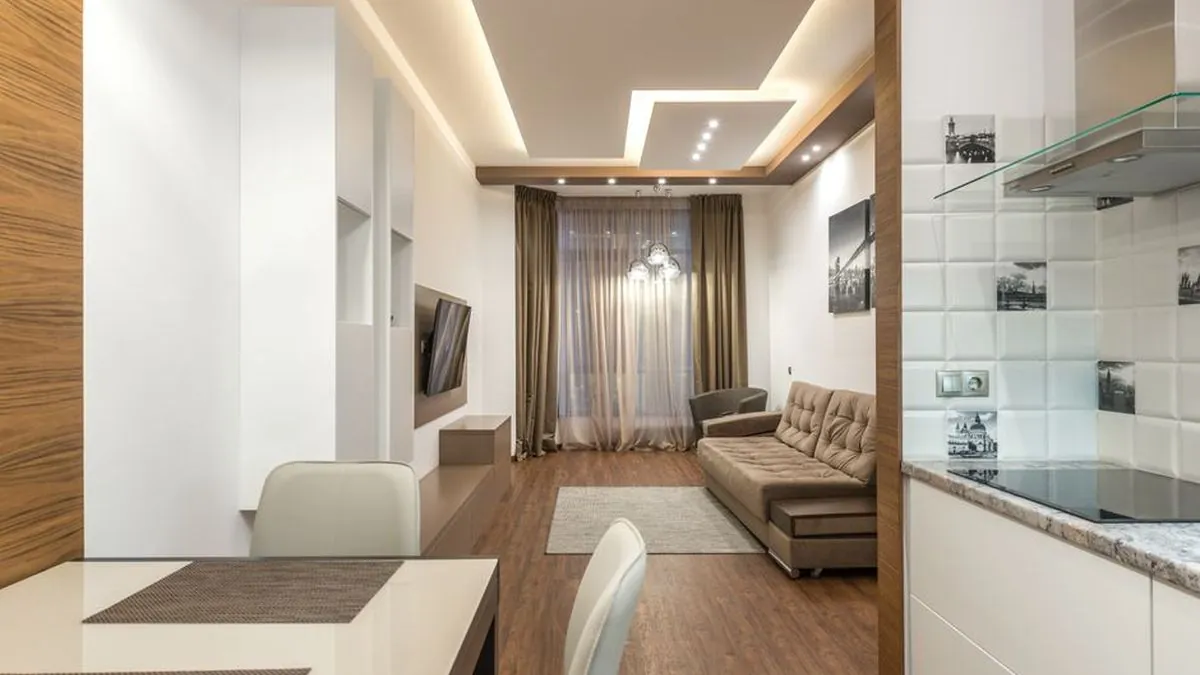
What Does a Ceiling Below the Slab Really Give You?
A false ceiling is a second surface suspended below the structural slab on a GI channel or MS angle framework. It is a service layer first and a design feature second.
- Hides conduit, AC copper piping, drain lines and speaker wiring without chasing the slab
- Carries cove lighting, recessed spotlights and profile lights that a bare slab cannot hold
- Drops the apparent ceiling height, so a tall room reads as proportioned rather than empty
- Softens noise from the floor above in apartments with thin slabs
- Lets you repair or change lighting later by opening one board instead of breaking plaster
Which Myths Should You Stop Believing?
Almost every false ceiling argument we hear on a first site visit comes from one of five beliefs. Here is what holds up on a Chennai site and what does not.
| Myth | Fact |
|---|---|
| It makes a room feel cramped | A 6 to 9 inch drop in a 10 ft room is unnoticeable; only full-area drops in low rooms feel tight |
| POP and gypsum are the same thing | POP is mixed and cast wet on site; gypsum is a factory board screwed to a grid, so finish and drying time differ |
| Any material works in any room | Moisture exposure decides the material, not the design; a wet-area ceiling and a bedroom ceiling are different products |
| It needs constant maintenance | A correctly framed ceiling needs only dusting and occasional repainting; sagging means a framing or moisture fault |
| Price depends only on the design | Board grade, framework spacing, lighting count and access height move the rate as much as the pattern does |
Which Material Suits Which Room in Chennai?
Chennai's coastal air sits high in relative humidity for most of the year, and the north-east monsoon adds months of wet walls. Material choice follows moisture before it follows looks. Read the India Meteorological Department's Chennai regional data if you want to see how long the wet season really runs.
- Gypsum false ceiling: factory boards such as Saint-Gobain Gyproc or USG Boral on a GI grid; the flattest finish available and the default for living rooms, bedrooms and offices, with moisture-resistant variants for semi-wet areas
- POP: a POP ceiling design is cast wet on site, so it shapes into curves, arches and mouldings that boards cannot match; keep it out of bathrooms, kitchens and any room with steam
- PVC: interlocking panels with no joints, waterproof and wipe-clean, the only safe pick for bathrooms, utility areas and covered balconies where damp is constant
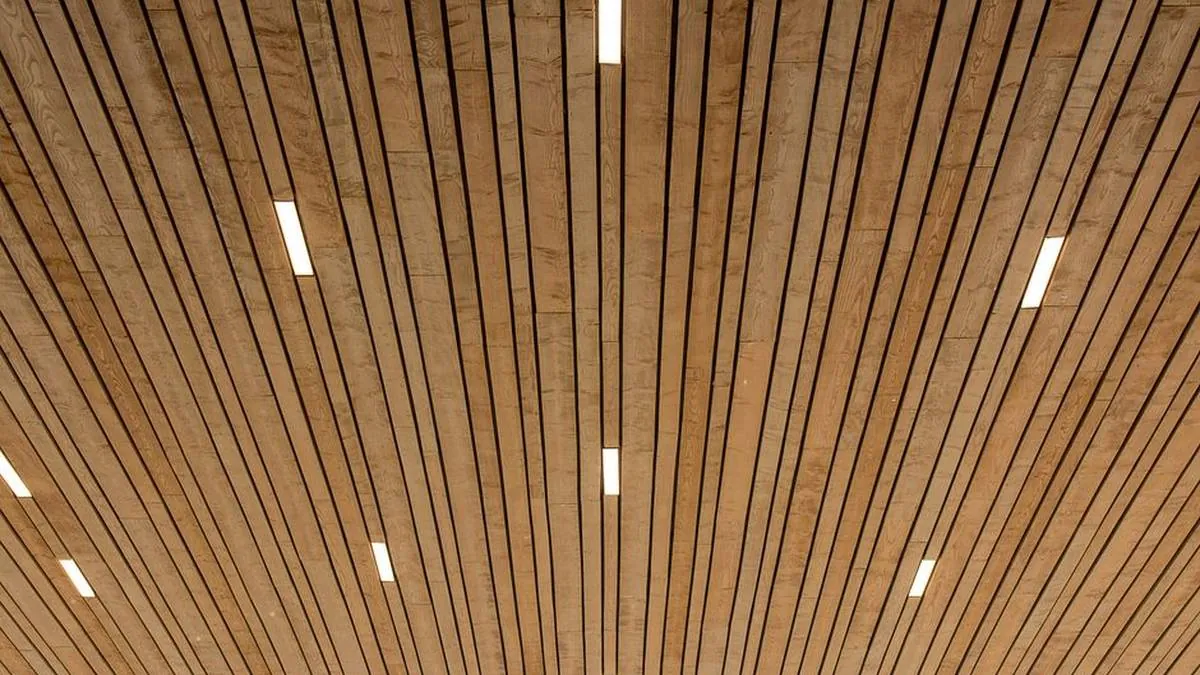
- Wooden and MDF veneer: linear slats and veneer panels for villas and feature ceilings; every component needs moisture-resistant treatment before it goes up
Our false ceiling designers in Chennai specify the board grade and brand on the quote itself, so you can check what is going above your head before work starts. Technical board data is published by Saint-Gobain Gyproc India if you want to compare grades yourself.
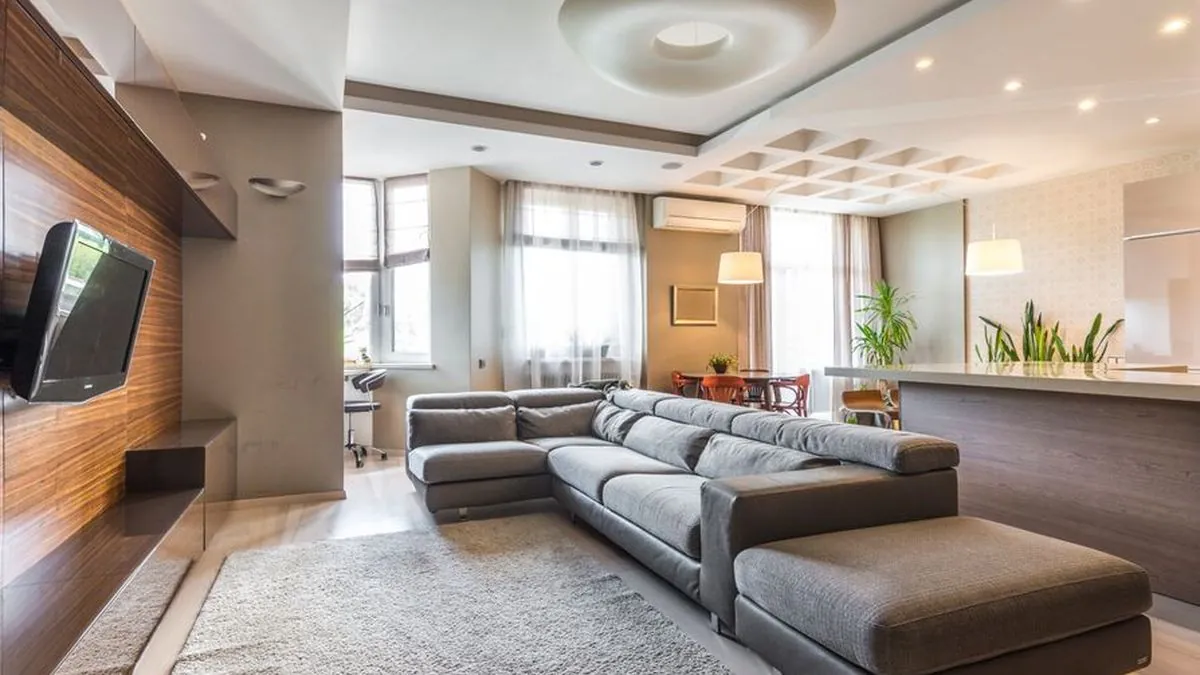
What Is the False Ceiling Cost Per Square Foot?
Style Well Interior prices ceiling work per square foot and quotes framework, board, basic lighting wiring and labour together. These are our own published rates, not market averages.
| Ceiling Type | Rate per Sq Ft | Best For |
|---|---|---|
| POP | Rs 65 to Rs 120 | Decorative mouldings, traditional designs |
| PVC | Rs 60 to Rs 100 | Bathrooms, kitchens, wet areas |
| Gypsum | Rs 75 to Rs 150 | Living rooms, bedrooms, offices |
| Wooden | Rs 200 to Rs 450 | Villas, restaurants, feature ceilings |
All rates include the GI framework, the board and concealment of basic electrical wiring. Lighting fixtures and cove LED strips are quoted separately, because fixture choice swings the figure more than the ceiling pattern does. Within a material, the rate moves with board grade, how closely the framework is spaced, the number of light points and how hard the ceiling is to reach.
Which Design Ideas Work Room by Room?
The same material behaves differently depending on how much of the ceiling you cover. These are the patterns that work in real Chennai flats rather than in showroom photographs.
- False ceiling design for hall: a peripheral cove along the walls with the centre left open, which lifts light without dropping the whole room
- Bedrooms: a single band above the bed with a concealed strip, so the light falls behind you rather than into your eyes
- Pooja rooms: a small stepped or recessed panel directly above the mandir, often with a warm 2700K strip; see our pooja room interior designers in Chennai page for how this ties into the rest of the room
- Dining areas: a square or circular recess centred on the table, which anchors a pendant light
- Kitchens and bathrooms: a flat PVC run with recessed fittings and no decorative profile to trap grease or steam
- Modern false ceiling design: fluted wood inserts, linear profile lights and a single clean step instead of several layered borders
A full-room hall interior design plan decides the ceiling pattern alongside the TV wall and the lighting circuit, which is why the ceiling is drawn with the room and not after it.
How Does the Work Actually Run on Site?
A ceiling is a sequence, and skipping a step is where sagging and cracking start.
- Site visit and measurement, including slab height, beam positions and existing conduit routes
- Free 3D design and a fixed per-square-foot quote, which Style Well Interior delivers in 5 to 7 days
- Electrical first fix: light points, switch loops and AC piping run and tested before anything is closed
- GI framework fixed to the slab at the designed spacing, levelled across the room
- Board fixing or POP casting, then jointing tape, putty and sanding
- Primer and two coats of paint, then fixtures mounted and the circuit tested
- Handover with the lighting scene checked at night, not only in daylight
A gypsum ceiling in a single room typically installs in 1 to 2 days, with jointing, painting and fixtures adding to that. On a full home, the ceiling sits inside the overall schedule our turnkey interior designers in Chennai run, so painters and electricians are not waiting on each other.
What Should You Check Before Anyone Drills?
Run this checklist before you release an advance. It takes ten minutes and prevents most of the complaints we are called in to fix.
- Board brand and grade named on the quote, not just "gypsum" or "POP"
- Moisture-resistant board or PVC confirmed for every wet and semi-wet area
- Framework material and spacing stated in writing
- Light point count and positions marked on the drawing you approve
- Clear height after the drop, measured and told to you in feet and inches
- Who pays for painting, and whether two coats are included
- AC, ducting and plumbing routed and tested before boarding begins
- A dated handover and warranty note covering the framework and finish
What Chennai Sites Teach You After a Monsoon
Style Well Interior has completed 200+ false ceiling projects across Chennai since 2013, and in our work the same two faults keep coming back after the north-east monsoon.
- Wrong material in a wet area: POP or ordinary gypsum used in a bathroom or open balcony because it was cheaper on the day; the board blooms, the paint lifts and the repair costs more than PVC would have
- A leak blamed on the ceiling: a slab leak from the flat above that nobody traced, so a plumbing fault gets read as a ceiling fault
- What we do now: our team opens and tests every wet-area line before boarding, and specifies moisture-resistant material for anything within reach of steam or rain
- Why quotes name the brand: every quote states the brand, the square footage and the lighting scope, so the decision is visible before the framework goes up
Frequently asked questions
How much ceiling height do you lose with a false ceiling?
A standard drop is about 6 to 9 inches, measured from the slab to the finished board. In a 10 ft room that is barely noticeable. If your slab height is already under 9 ft, we usually design a peripheral cove and leave the centre of the room open so the clear height stays comfortable.
Which false ceiling material is best for Chennai's humidity?
For dry rooms such as living rooms and bedrooms, gypsum board on a GI grid gives the flattest and most stable finish. For bathrooms, kitchens, utility areas and covered balconies, PVC panels are the safe choice because they are waterproof and will not swell, warp or grow fungus in coastal damp.
What is the difference between POP and gypsum?
POP is plaster of Paris mixed and cast wet on site, so it can be shaped into curves, arches and mouldings. Gypsum is a factory-made board screwed to a metal grid, which gives a flatter surface and a faster, cleaner installation. POP suits decorative work and gypsum suits large flat areas.
How long does a false ceiling take to install?
A gypsum ceiling in a single room typically goes up in 1 to 2 days once the electrical first fix is done. Jointing, putty, sanding, two coats of paint and fixture mounting come on top of that, and most residential ceiling work in Chennai finishes within a few days to a couple of weeks depending on the size of the space and the design complexity.
What does a false ceiling cost per square foot at Style Well Interior?
Our published rates are Rs 60 to Rs 100 per sq ft for PVC, Rs 65 to Rs 120 for POP, Rs 75 to Rs 150 for gypsum and Rs 200 to Rs 450 for wooden ceilings. Each rate includes the GI framework, the board and concealment of basic electrical wiring. Light fittings and cove LED strips are quoted separately.
Can a false ceiling be installed in a rented flat?
Technically yes, but it is drilled into the slab and cannot be moved, so it stays with the property. Most tenants are better served by surface-mounted profile lighting or a light pelmet, which gives a similar lighting effect without permanent fixing.
Does a false ceiling help with heat or noise?
It adds a small air gap that slightly reduces heat gain from the slab and softens footfall noise from the floor above. It is not a substitute for insulation, so treat the comfort gain as a bonus rather than the reason to install one.
Tell us the rooms and the ceiling height you are working with. You get a free site visit, a 3D design and a fixed quote within 5 to 7 days.
Tell us your BHK size and budget band — our team replies with a clear, itemised quote within 48 hours.