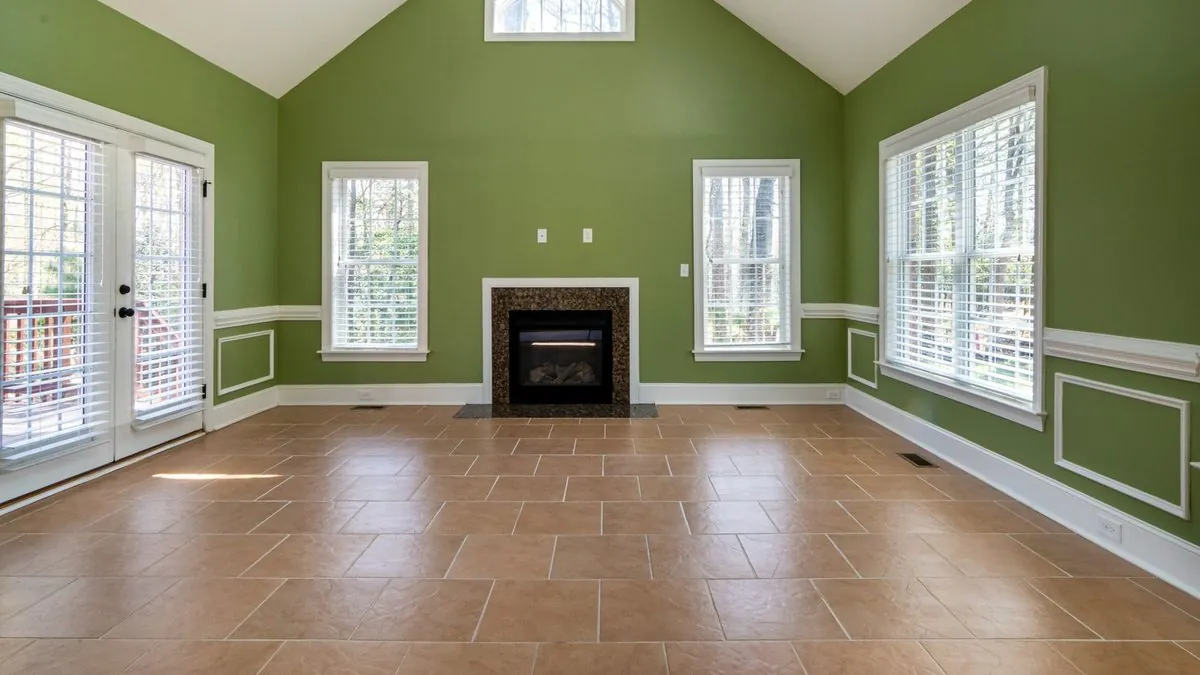
Most flooring regret in Chennai homes starts in a showroom, where a floor tiles design is chosen under display lighting. Then the northeast monsoon arrives, the hall stays damp for weeks, the marble near the balcony door dulls and a wooden strip in the bedroom lifts at one edge. The material was not bad. It was wrong for a hot, humid coastal city. This guide compares the flooring you will actually be quoted for, room by room, so you can choose once.
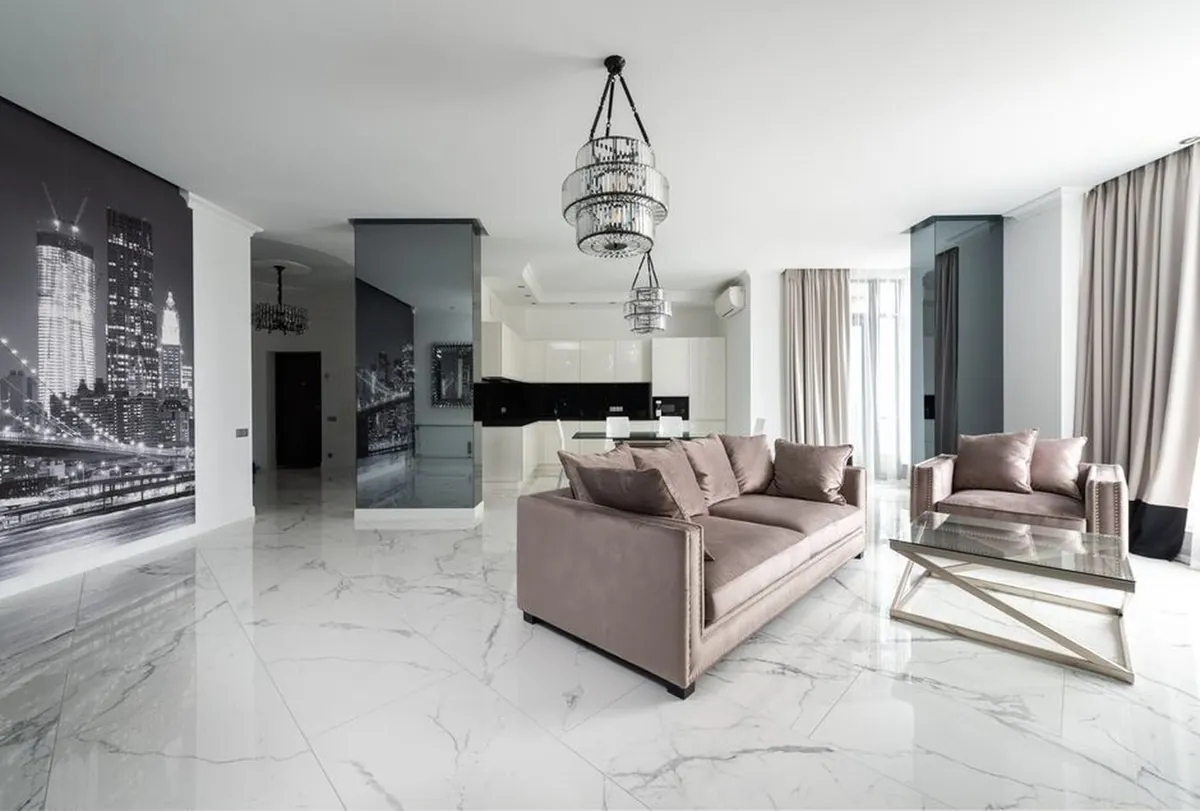
Why Does Floor Tiles Design Matter More in Chennai Than in Cooler Cities?
A floor in Chennai is a climate component, not just a surface. It has to stay cool through long summers, shrug off airborne salt near the coast, and dry out quickly after months of high humidity.
- Heat gain: dense, light-coloured floors stay noticeably cooler underfoot than dark or synthetic surfaces in summer.
- Humidity: anything with a wood-based core can swell, cup or lift when the air stays damp for weeks.
- Salt and dust: coastal grit acts like sandpaper on soft, polished surfaces, so the finish dulls before the material wears out.
- Water events: ground-floor homes and balconies can take standing water, which rules out some otherwise good materials.
- Cleaning reality: most Chennai homes are wet-mopped daily, so the floor has to tolerate water every single day.
The India Meteorological Department's Chennai centre publishes rainfall and climate summaries, which are worth a look before you pick a floor for a damp coastal city.
What Are the Main Flooring Types Used in Indian Homes?
Six materials cover almost every residential quote in the city. Knowing what each one actually is removes most of the confusion in a showroom.
- Vitrified tiles: clay-based tiles fired until they are dense and nearly non-absorbent, sold as glazed, double-charge or full-body.
- Ceramic tiles: lighter-bodied, more absorbent and softer, usually chosen for walls, bathrooms and utility areas.
- Marble: natural stone, cool and seamless when laid in large slabs, but porous and soft enough to scratch and stain.
- Granite: natural stone that is far harder and denser than marble, with fewer colour options.
- Wooden flooring: solid timber, engineered boards or laminate, warm underfoot but built around a moisture-sensitive core.
- Vinyl flooring: resilient sheet or plank, waterproof on the surface, soft and quiet, available in wood and stone prints.
The Bureau of Indian Standards classifies pressed ceramic tiles under IS 15622 by water absorption group, surface and edge finish, and wall or floor use, which is a useful yardstick if a supplier cannot tell you what class a tile belongs to.
How Do the Main Flooring Types Compare?
This is the comparison most homeowners are looking for. Read it across one row at a time rather than hunting for a single winner, because the right answer changes by room.
| Flooring | Durability | Heat and humidity | Maintenance | Best for |
|---|---|---|---|---|
| Vitrified tiles | Very high | Stays cool, unaffected by damp | Low, grout needs attention | Hall, bedrooms, kitchen |
| Ceramic tiles | Moderate | Fine indoors, can chip | Low | Bathrooms, utility, walls |
| Marble | Good but soft | Cool, but porous | High, needs sealing and polishing | Formal living, pooja room |
| Granite | Very high | Cool and dense | Low | Kitchen counters, stairs, high traffic |
| Wooden flooring | Varies by type | Poor in long damp spells | Moderate to high | Dry bedrooms, study |
| Vinyl flooring | Moderate | Handles damp well | Very low | Kids rooms, rentals, quick upgrades |
Are Vitrified Tiles the Safest Default for Chennai Homes?
For most flats and independent houses, yes. Vitrified tiles absorb very little water, stay cool, tolerate daily mopping and come in large formats that reduce grout lines.
- Full-body tiles carry their colour right through, so a chip does not show a pale core.
- Double-charge tiles are a sensible middle ground for halls that take heavy footfall.
- Large formats such as 800x800 mm and above make a small hall read as one continuous plane.
- Matt and anti-skid finishes are safer than high-gloss anywhere water reaches the floor.
- The weak point is grout, not the tile, so insist on a proper joint filler rather than plain cement slurry.
Our best home interior designers in Chennai team can map this category room by room after a site visit, since it fails the least of the six.
When Does Marble Flooring Make Sense and When Does It Not?
Marble flooring still gives a look that tile prints cannot copy, and it stays genuinely cool. It also demands upkeep that many families stop doing after the first year.
- It suits formal living rooms and pooja rooms, where traffic is light and spills are rare.
- It is porous, so turmeric, coffee, lime and acidic cleaners leave marks that do not mop out.
- It needs periodic sealing and occasional machine polishing to keep its surface even.
- It is a poor choice directly inside a balcony door or a coastal-facing entrance where grit arrives daily.
- Edge chipping at doorways is common, so detail those junctions carefully at the drawing stage.
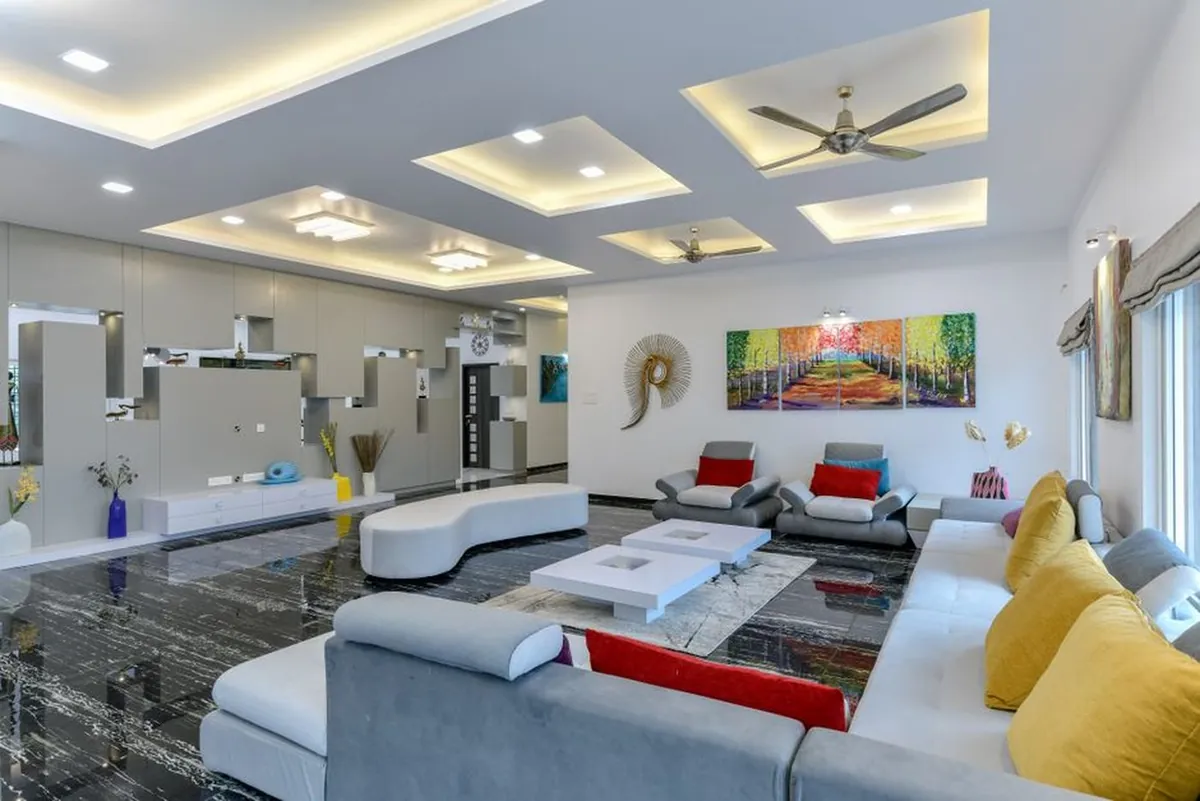
Can Wooden Flooring Survive Chennai Humidity?
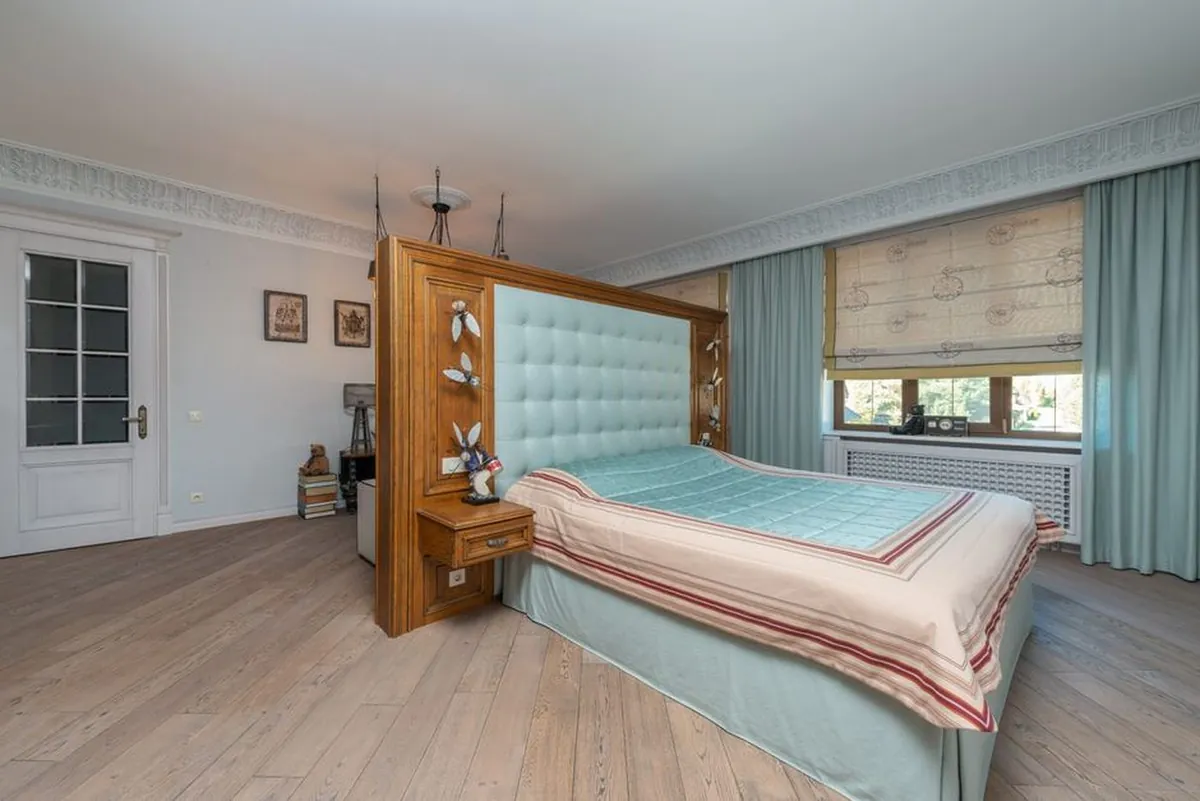
Partly, and only with the right build-up. Solid timber is the most at risk in a coastal city; engineered boards with a stable plywood core behave far better.
- Keep it to bedrooms and study rooms that stay dry and air-conditioned for part of the day.
- Never run it into kitchens, bathrooms, balconies or ground-floor areas that can take standing water.
- Acclimatise boards on site before laying, and respect the expansion gap at every wall.
- Treat termite protection as part of the job, not an optional add-on.
- Wood-look vitrified planks give you the same visual warmth with far less moisture risk, so ask for them before committing to real timber.
Where Does Vinyl Flooring Fit in an Indian Home?
Vinyl flooring is the practical choice when you need a fast, quiet, forgiving floor. It is laid over an existing level surface, so it suits upgrades where breaking the old floor is not an option.
- It is soft and warm underfoot, which makes it popular in children's rooms and home offices.
- The wear layer, not the print, decides how long it lasts, so ask for that figure.
- It needs a genuinely flat base; every ridge underneath telegraphs through within months.
- Heavy furniture legs can dent it permanently, so use wide floor protectors.
- It is the least impressive option for resale value in a city where buyers expect tile or stone.
Which Flooring Works in Each Room?
Mixing materials by room is normal and sensible. The only rule is that the transitions should be deliberate, with a proper threshold strip or a change of level.
| Room | Works well | Avoid |
|---|---|---|
| Hall and dining | Large-format vitrified, granite | Soft polished marble at entries |
| Bedrooms | Vitrified, wood-look planks, engineered boards | Solid timber on ground floors |
| Kitchen | Anti-skid vitrified, granite | Wood, laminate, soft stone |
| Bathroom | Anti-skid ceramic or vitrified | Anything wood based |
| Balcony and utility | Outdoor-grade anti-skid tile | Polished finishes, vinyl |
That logic runs through our modular kitchen companies in Chennai work, where tile and waterproofing are confirmed on site before the modules go in, and our bathroom interior designers in Chennai projects, which settle anti-skid flooring and waterproofing before tiling begins.
What We Check on Site Before Specifying a Floor
Style Well has worked on Chennai homes since 2013, and in our projects one lesson keeps repeating: the slab matters more than the sample. Most flooring problems trace back to what sits under the tile, not the tile itself.
- Slab level and flatness, because an uneven base is the usual cause of hollow-sounding tiles.
- Moisture in the screed, especially on ground floors and in homes handed over during the monsoon.
- Waterproofing and slope at every wet area and balcony threshold.
- Door clearances, since a new floor over an old one eats into shutter height.
- Daylight direction, because a glossy floor facing a west window turns into a glare sheet by evening.
- Actual household use, including how many people mop daily and whether pets or small children are in the house.
How Do You Compare Flooring Quotes Without Getting Lost in Rates?
Two quotes with the same headline rate can differ enormously once you read what is inside them. Compare scope, not the number at the bottom.
- Ask whether the rate includes levelling, adhesive, grout, skirting, cutting, edge polishing and debris removal.
- Confirm the tile class and size being quoted, not just the brand name.
- Check wastage assumptions, which rise sharply with large formats and diagonal layouts.
- Ask who owns a cracked or hollow tile six months later, and get that answer in writing.
- Insist on one line per room, so changing one space does not reopen the whole quote.
Our turnkey interior designers in Chennai team handles design, civil work, electrical, plumbing, painting and modular furniture under one contract, so the flooring scope sits in one quote instead of being negotiated trade by trade.
Frequently asked questions
Which flooring is best for Chennai homes?
Vitrified tiles are the safest default for most Chennai flats and houses. They absorb very little water, stay cool, tolerate daily mopping and come in large formats with fewer grout lines. Use other materials only where a specific room justifies them.
Is wooden flooring a good idea in a humid city like Chennai?
Only in dry rooms and only with the right build-up. Engineered boards with a stable plywood core behave far better than solid timber, and wood-look vitrified planks avoid the moisture risk altogether. Keep real wood out of kitchens, bathrooms and balconies.
Is marble flooring too high maintenance for an Indian family home?
It can be. Marble is porous, so turmeric, coffee and acidic cleaners leave marks, and it needs periodic sealing and polishing. It suits formal living rooms and pooja rooms with light traffic better than busy halls or entrances.
Can vinyl flooring be laid over my existing floor?
Often yes, as long as the surface underneath is clean, dry and genuinely flat. Any ridge or hollow telegraphs through the vinyl within months, so get the base checked before you order.
What is the difference between vitrified and ceramic tiles?
Vitrified tiles are fired until they are dense and almost non-absorbent, so they suit halls, bedrooms and kitchens. Ceramic tiles are lighter and more absorbent, which makes them better for walls, bathrooms and utility areas.
How do I compare two flooring quotes properly?
Compare scope, not the headline rate. Check whether levelling, adhesive, grout, skirting, cutting and debris removal are included, confirm the tile class and size, and ask who is responsible for a cracked or hollow tile after handover.
Tell us your BHK size and the rooms you are redoing. Our team will suggest the right flooring for each room and send an itemised quote.
Tell us your BHK size and budget band — our team replies with a clear, itemised quote within 48 hours.